



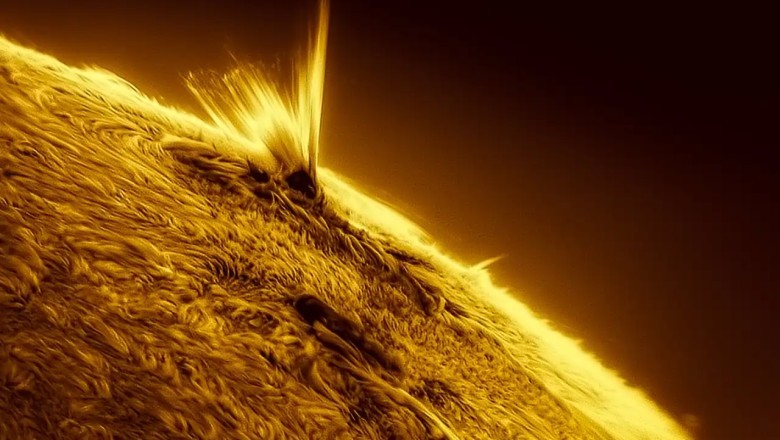
This annual astronomical moment influences Earth’s speed, seasons, and long-term climate patterns, even if we barely notice it.
At the start of every year, Earth quietly reaches perihelion, the moment when our planet is at its closest point to the Sun during its annual orbit. In 2026, this will occur on January 3, when Earth will be about 147 million kilometers away from the Sun. Despite sounding dramatic, the event happens without any visible change in the sky and often goes unnoticed by most people.
One surprising detail is that perihelion happens during winter in the Northern Hemisphere, even though Earth is closer to the Sun than at any other time of year. The reason is simple but counterintuitive: seasons are controlled by Earth’s axial tilt, not its distance from the Sun. While perihelion slightly increases the intensity of sunlight reaching Earth, the effect is modest compared to the impact of the planet’s 23.5-degree tilt.
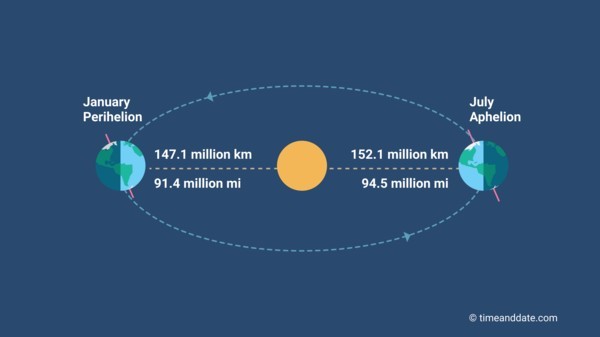
Perihelion does, however, affect how Earth moves through space. As the planet approaches the Sun, it travels faster in its orbit, moving several thousand kilometers per hour quicker than it does at its most distant point, known as aphelion. This difference subtly alters the length of the seasons, making winters in the Northern Hemisphere slightly shorter and summers in the Southern Hemisphere slightly longer.
Over much longer timescales, changes in Earth’s orbit — including how elliptical it is — play a role in major climate shifts, such as ice ages. Scientists continue to track perihelion closely, not only to understand Earth’s climate history, but also to predict satellite trajectories and assess potential asteroid risks. It may not be a spectacle, but perihelion is a key reminder of the precise cosmic mechanics shaping life on Earth.














Comments
0 comment